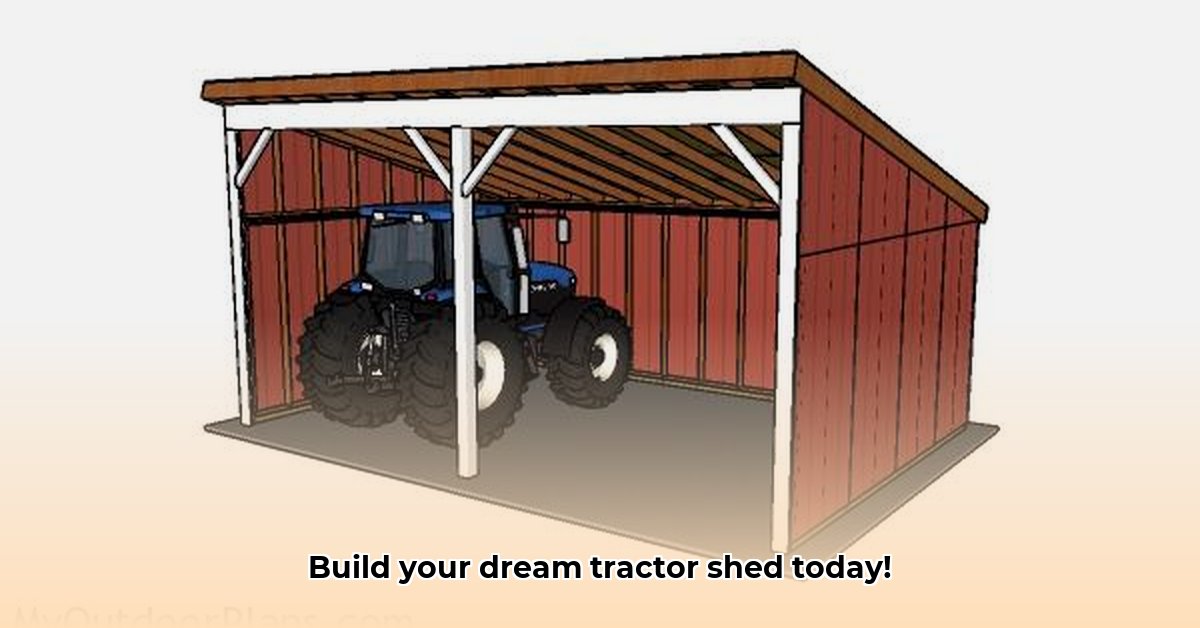
Tractor Shed Plans: Your Guide to Building the Perfect Shelter
Protecting your valuable tractor is paramount. A well-designed shed safeguards your investment and ensures your equipment remains in top condition. This guide provides actionable steps to plan and build a durable, efficient tractor shed. We'll compare steel and wood construction, delve into design considerations, and offer a step-by-step guide using a prefabricated steel kit as an example. By the end, you'll be equipped to build a shed that protects your equipment for years to come.
Choosing the Right Materials: Steel vs. Wood
The first critical decision is material selection. Steel and wood are popular choices, each with its own set of advantages and disadvantages. The best choice depends on your budget, climate, and desired level of maintenance.
| Feature | Steel | Wood |
|---|---|---|
| Initial Cost | Higher | Lower |
| Lifespan | Longer (with proper maintenance) | Shorter (dependent on climate and maintenance) |
| Maintenance | Lower (rust prevention primarily) | Higher (painting, treating, repairs) |
| Fire Resistance | Excellent | Lower (highly flammable) |
| Environmental Impact | Higher manufacturing footprint (but recyclable) | Lower (if sustainably sourced; biodegradable) |
| Construction Ease | Often quicker with prefabricated kits | More time-consuming, requires more skill |
| Aesthetics | Modern, clean look | Traditional, rustic charm, highly customizable |
Steel: Offers superior durability and longevity with minimal maintenance, primarily involving rust prevention. However, the initial cost is higher, and the environmental impact of production is considerable.
Wood: Provides a more rustic aesthetic and a lower initial cost. Maintenance is significant, requiring regular painting, treatment to prevent rot and insect damage, and potential repairs due to weathering.
Do you prioritize low maintenance and long-term durability or a more budget-friendly option with higher maintenance needs? This decision is crucial for long-term cost-effectiveness.
Designing Your Ideal Tractor Shed: Key Considerations
Effective shed design protects your investment and ensures ease of access.
Size: Measure your tractor and implements, adding extra space for maneuverability. Future expansion needs should also be considered. How much additional equipment might you store in the future?
Ventilation: Proper airflow prevents moisture buildup, crucial for preventing rust and deterioration. Vents and ridge vents improve circulation. Is adequate ventilation critical in your climate?
Insulation: Insulation protects equipment from extreme temperatures, extending its lifespan and potentially saving energy costs. Insulation is particularly beneficial in harsh climates. Should you prioritize energy efficiency with insulation?
Foundation: A solid foundation ensures stability and longevity. The type of foundation depends on soil conditions and the shed's size and weight. What type of foundation suits your soil and climate?
Roofing: Choose a durable roofing material suitable for your local climate. Metal roofing provides excellent durability, but other weatherproof options exist. How important is roof durability in your region’s weather patterns?
Doors and Access: Doors must allow easy tractor access and maneuverability. Consider the direction you will most frequently access your tractor. What door design maximizes convenience and access?
Building Your Shed: A Step-by-Step Guide (Prefabricated Steel Kit)
Using a prefabricated steel kit simplifies construction. This guide outlines a general process:
Site Preparation: Level the ground and prepare the foundation (per kit instructions). Accurate site prep ensures stability and longevity.
Assembly: Follow the kit's instructions meticulously. Precise assembly is crucial for structural integrity.
Finishing Touches: Install gutters, downspouts, and other desired features. This completes the functional and aesthetic aspects.
Note: Safety is paramount. Use appropriate safety gear and seek professional help if needed.
Building Codes and Regulations: Compliance and Permits
Check local building codes and obtain necessary permits before starting construction. Compliance prevents fines and ensures structural safety. Insurance implications may also change with adherence to codes. What are your local building regulations and permitting processes?
Maintenance and Troubleshooting: Extending Your Shed's Lifespan
Regular maintenance prevents costly repairs.
Steel Sheds: Inspect for rust, and repaint as needed.
Wooden Sheds: Regularly inspect for rot, insect damage, and weathering. Apply protective treatments like sealants.
Preventative maintenance saves money in the long run.
Resources and Further Reading
For more detailed plans and information, consult these reputable resources: https://polebarnkits.org/tractor-barns/ (and other relevant links as needed).